The evidence
Artifacts
West African gold dust
Session 5 (Triangle Trade): physical evidence of the triangle trade as a real system. The Whydah carried this back from West Africa as part of slave-trade cargo from the Royal Africa Company's Gold Coast operation, the same voyage that carried 367 captives to Jamaica.
Akan gold ornaments (79+ identified)
Sessions 5, 6, and 17: necklace beads, cylindrical beads, openwork discs, a cast cowrie ornament, bell-shaped pendants, and small gold blocks made by Akan-speaking peoples (Asante, Baule) of modern Ghana and Côte d'Ivoire. Most are clipped, folded, hole-punched, or flattened, not as decoration but as scrap gold sold by weight for melting at the next Atlantic port. African royal/elite art deliberately mutilated for European bullion. One artifact = one story of the Atlantic slave trade commodifying African art alongside African people. Per Martha Ehrlich's 1989 catalogue in African Arts, these are the earliest reliably dated Akan gold ornaments anywhere. They survived only because the wreck preserved them before they could be melted down. NPS underwater archaeologist Dave Conlin (quoted in NatGeo, Sept 2025): "Slave ships made excellent pirate ships. They were designed to be fast, to reduce the time at sea, and minimize deaths — not out of any humanitarian concern, but purely for the profitability of the crossing." Up to 50 of Bellamy's crew were of African origin (NatGeo 2025). Sources: Ehrlich 1989; Smith/NatGeo 2025. Solid
Spanish silver reales ("pieces of eight")
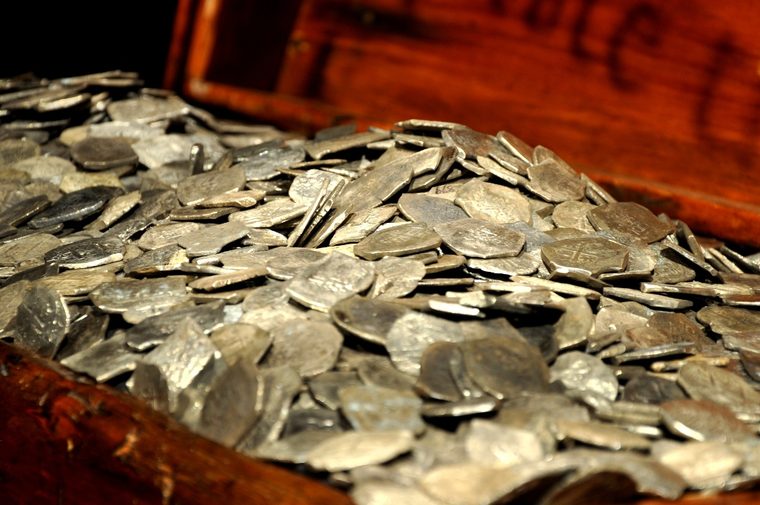
Day 13 (Where Ships Squeeze Through): evidence of what Bellamy actually took. Thousands of these recovered. Show students the coins and ask why pirates went to the Caribbean specifically.
Gold ingots and artifacts
Sessions 5 and 14: the economic scale of the trade. Ingots weren't personal jewelry; they were capital.
Firearms, cutlasses, daggers
Week 3 (Life as a Pirate: S9–S11): the physical reality of piracy as violence. This is where we anchor the moral complexity conversation.
Personal items: buttons, buckles, smoking pipes, pewter plates
FT1 (museum trip) and Session 17 (Synthesis Studio): everyday objects humanize the crew. These were PEOPLE, not legends. The pipes and plates do more work than any speech.
The ship's bell (inscribed "The Whydah Gally 1716")
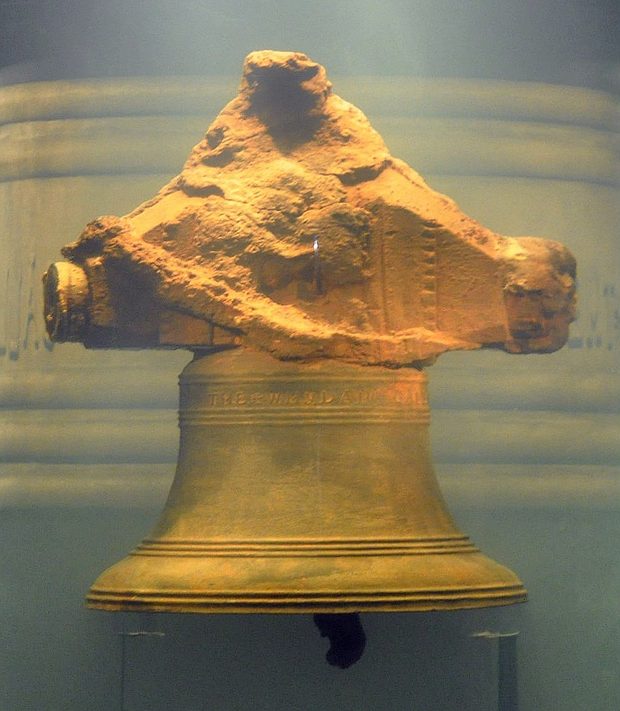
Day 12 (Lost and Found): the single object that proved the wreck's identity in 1985. Also confirms the 1716 operational date. A teaching story in itself.
John King's fibula in a shoe and silk stocking
Sessions 16 and 17: the most emotionally potent single artifact. A child's death made physically present. We anchor the perspective-taking work around it.
Silver buckle attributed to John King
Session 16: a personal effect of the boy pirate. Small, specific, humanizing.
Six skeletons in concretions
Session 13: ongoing DNA identification work. The excavation continues; students learn that "history" isn't finished.
Wax seals and the wounded-heart engraving
Session 10 (Ship's Articles): the recovered wax-seal imagery (wheat sheaf, crown, griffin, anchor) belongs to a personal signet ring attributed to original captain Lawrence Prince, and a wounded-heart symbol appears separately among crew engravings found on the wreck. Neither is evidence of an Articles-signing ritual. The Ship's Articles themselves do not survive. Trial testimony confirms the crew had Articles, and Roberts' 1721 articles are the taught analogue. (The wounded-heart imagery does invert Puritan iconography, where the heart symbolized the triumphant soul. Teach it as an artifact, not as proof.) Sources: Arnold 1986 (Boston Globe), Ewen & Skowronek 2016.
Cannon (multiple)
FT2 kayak pre-brief (ship types) and Session 11 (The Wreck): scale and firepower of a period pirate vessel.