How we know
Confidence & methods
What the confidence tiers mean
Solid We trust it — multiple reputable sources or primary-source documented
Contested It's disputed, attribution is shaky, or it's interpretation rather than fact
Mythologized Traces only to Johnson's 1724 General History of the Pyrates or popular retellings — we shouldn't teach it as fact
Where this all came from.
Most of the research for this site drew on Wikipedia, museum sites, academic reviews, and secondary summaries. We haven't gone directly to Rediker's Villains of All Nations, Kinkor's Whydah Sourcebook, or Woodard's Republic of Pirates yet — so any claim that hangs on their specific arguments, we want to double-check against the primary text before teaching it.
The research cutoff is May 2025. Anything newer — fresh scholarship, current museum exhibits, recent excavation finds — isn't reflected here and we should chase it down as we go.
Full source lists and tier-by-tier findings live alongside this file in
The research cutoff is May 2025. Anything newer — fresh scholarship, current museum exhibits, recent excavation finds — isn't reflected here and we should chase it down as we go.
Full source lists and tier-by-tier findings live alongside this file in
research-findings.md, research-findings-2.md, and research-findings-3.md.
Key sources by reliability
Most authoritative for Whydah-specific content
- Kenneth Kinkor, Whydah Sourcebook (archival compilation via Expedition Whydah)
- Clifford, Kinkor & Simpson, Real Pirates: The Untold Story of the Whydah from Slave Ship to Pirate Ship (National Geographic, 2007)
- Real Pirates Salem Educator Guide
- Boston Vice-Admiralty Court records (1717)
- Cotton Mather, "Instructions to the Living, from the Condition of the Dead" (1717)
- Cyprian Southack's 1717 report to Governor Shute + his New England chart
- Charles Ewen & Russell Skowronek, Pieces of Eight: More Archaeological History of Piracy (2016) — wreck-site artifact analysis including the Wounded Heart wax seals
- Martha J. Ehrlich, "Early Akan Gold from the Wreck of the Whydah," African Arts 22, no. 4 (1989): 52–57, 87–88 — peer-reviewed Africanist scholarship on the African material recovered from the wreck. The keystone source for the African end of the Whydah voyage. JSTOR
- Elizabeth Donnan, "The New England Slave Trade after the Revolution," The New England Quarterly 3, no. 2 (April 1930): 251–278 — archival tour de force naming Salem ships, merchants, and voyages 1783–1808. Identifies Salem as "the most active of the Massachusetts ports" in the post-Revolutionary slave trade. Critical primary-source work for the Salem-complicity teaching thread.
- Roff Smith, "We're Still Finding Treasure from This 'Golden Age' Pirate Shipwreck," National Geographic, 12 September 2025 — strongest popular-magazine treatment of the Whydah surveyed. Includes Dave Conlin (NPS underwater archaeologist) on slave ships as engineered-fast → why they made excellent pirate ships. Confirms 367 captives loaded / 312 surviving (Field Museum figure, vs. Wikipedia's ~500). Reports up to 50 of Bellamy's crew were of African origin. Hedges responsibly on Maria Hallett (notes the legend; doesn't present as fact) and on the Beer-speech (attributes carefully to the GH).
- JP Mayer, "The People's Pirate: Samuel Bellamy's Role as a Social Bandit in the Golden Age of Piracy" (2016, Brown ARCH 0676) — synthesis paper drawing on Hobsbawm, Rediker, Clifford & Kinkor
Scholarly for the broader context
- Marcus Rediker, Villains of All Nations (2004) — causes of piracy, pirates-as-resistance thesis
- Marcus Rediker, Between the Devil and the Deep Blue Sea (1987) — sailor labor and culture
- Marcus Rediker, The Slave Ship: A Human History (Viking, 2007) — slave-trade-labor dimension that frames the Akan gold cargo in Atlantic context.
- Colin Woodard, The Republic of Pirates (2007) — narrative history of the Golden Age, including the Bellamy–Hornigold–Thache shared milieu.
- Eric Jay Dolin, Black Flags, Blue Waters: The Epic History of America's Most Notorious Pirates (Liveright, 2018) — Marblehead-based popular historian. Covers the colonies-as-pirate-business-partner thesis (Boston, Newport, NY profited from pirate commerce until pirates started attacking colonial ships post-Utrecht). Includes Philip Ashton, the Marblehead fisherman captured by Edward Low in 1722, who escaped and was rescued by a Salem brigantine. Most important Salem/North Shore-friendly synthesis available.
- W. Jeffrey Bolster, Black Jacks: African American Seamen in the Age of Sail (Harvard, 1998) — racial-labor history of the Atlantic, frames John Julian and the Whydah's multinational crew.
- Timothy F. Garrard, Akan Weights and the Gold Trade (Longman, 1980); Gold of Africa (Prestel, 1989) — Africanist references on the Akan gold trade.
- Mark G. Hanna, Pirate Nests and the Rise of the British Empire, 1570–1740 (UNC / Omohundro Institute, 2015), and Piracy in Colonial North America, Oxford Research Encyclopedia of American History (2020). DOI: 10.1093/ACREFORE/9780199329175.013.813 — the major scholarly counter-thesis to Rediker. Where Rediker reads pirates as a working-class proto-revolutionary counter-society resisting colonial elites from below, Hanna argues pirates were enabled, sheltered, and profited from by colonial elites from above (governors, merchants, even ministers). Both readings can be true at once — pirate crews were working-class while their on-shore sponsors were merchant elites — but they emphasize different parts of the same archive. Hanna's killer Bellamy framing: after the Treaty of Utrecht (1713) and the new Piracy Acts, colonial governors stopped tolerating "their" pirates — meaning Bellamy in April 1717 was attacking the very New England coast that, fifteen years earlier, would have welcomed him as a supplier of contraband and silver. The wreck happened on a coast that had turned hostile within his career. Free public-facing version of the argument: Hanna, "A Lot of What Is Known About Pirates Is Not True…" NEH Humanities Winter 2017 (link) — assignable to students.
- George Francis Dow & John Henry Edmonds, The Pirates of the New England Coast 1630–1730 (Marine Research Society, 1923; Dover reprint 1996) — foundational older work by the longtime curator of Salem's Essex Institute. Salem-area focused. Period images from this book are already in the site's pics folder.
- Gregory N. Flemming, At the Point of a Cutlass: The Pirate Capture, Bold Escape, and Lonely Exile of Philip Ashton (ForeEdge, 2015) — book-length treatment of the Marblehead fisherman captured by Edward Low in 1722 (rescued by a Salem brigantine in 1725; see Salem section). Pairs with the Ashton callout; cited in Hanna's bibliography.
- Donald A. Schubert, "Piracy, Riches, and Social Equality: The Wreck of the Whydah off Cape Cod," Historical Journal of Massachusetts, Westfield State (Winter 2006) — the source of the "forty-foot waves" wreck-night detail and one of the few peer-reviewed treatments of the Whydah's social-equality dimension specifically. Cited by the PocketSights / Boston Pirate Trail walking tour.
- Peter Earle, The Pirate Wars (Methuen, 2003) — broader scholarly treatment of state efforts to suppress piracy across centuries.
- Robert Blyth, Buried Treasure: A Pirate Miscellany (Royal Museums Greenwich Publishing) — RMG museum-published popular treatment, useful as institutional curatorial framing.
- Joel H. Baer, ed., British Piracy in the Golden Age: History and Interpretation, 1660–1730 (Pickering & Chatto, 2007), 4 volumes — the modern academic edition of the period's primary sources. Trial of Eight Persons appears at vol. 2, pp. 289–319; Mather's Account of the Behaviour and Last Dying Speeches at vol. 4, pp. 91–92. The page numbers used in the deposition spotlight quotes above come from this edition.
- J. L. Anderson, "Piracy and World History: An Economic Perspective on Maritime Predation," Journal of World History 6, no. 2 (Fall 1995): 175–199 — economic framework for understanding piracy across eras. Key concepts: three types of piracy (parasitic, intrinsic, episodic), Gosse's piracy cycle, protection-cost differentials (Frederic C. Lane), and the Treaty of Utrecht 1713 as the trigger that demobilized privateers and created Bellamy's labor market. Also: piracy clusters at chokepoints — usable directly for S11 (Modern Oceans).
- Shannon Lee Dawdy & Joe Bonni, "Towards a General Theory of Piracy," Anthropological Quarterly 85, no. 3 (Summer 2012): 673–699 — Hobsbawmian anthropological framework treating Golden Age pirates as social bandits. Includes a useful taxonomy table (Pirate · Privateer · Smuggler · Freebooter · Filibuster · Buccaneer · Corsair) and the "pirate heterotopia" concept (Foucault). Connects historical piracy to contemporary intellectual-property debates. Note: dashboard's existing Bellamy-as-social-bandit framing draws on this lineage via Mayer 2016.
- Alessandro Scheffler, "Piracy — Threat or Nuisance?" NATO Defense College Research Paper No. 56 (Feb 2010) — modern policy paper on Somali piracy. Three-factor hotspot model: (1) waterway proximity + (2) unpoliced/failed-state seas + (3) coastal economic deprivation. Same logic as Anderson's "episodic" category. Use for S14 to bridge 1717 and modern chokepoints. Also a contrarian critique of inflated piracy statistics — useful for teaching skepticism about piracy narratives ancient and modern.
- Baylus C. Brooks, "'Born in Jamaica, of Very Creditable Parents' or 'A Bristol Man Born'? Excavating the Real Edward Thache, 'Blackbeard the Pirate,'" North Carolina Historical Review 92, no. 3 (2015): 235–277. JSTOR — methodological critique of General History of the Pyrates (Mist authorship; first vs. second edition alterations) directly portable to the Bellamy chapter; documents the Bellamy–Thache shared-Hornigold context.
- Baylus C. Brooks, Quest for Blackbeard: The True Story of Edward Thache and His World (CreateSpace, 2016) — book-length expansion.
- Richard Frohock, "Satire and Civil Governance in A General History of the Pyrates (1724, 1726)," The Eighteenth Century 56, no. 4 (Winter 2015): 467–483. JSTOR — literary-critical reading of the GH as double satire: voices pirate critique while mocking pirates as common criminals. Traces the Bellamy "free Prince" Beer-speech to a St. Augustine City of God trope (a pirate tells Alexander the Great the only difference between them is scale). Shows the GH's narrator systematically undercuts pirate-democracy claims through inserted episodes (the Stroler; the Royal Pirate play turning to lethal melee; the proposed Maine kingdom in "abject Slavery"). Critiques Rediker, Linebaugh, and Leeson for selectively quoting the GH while omitting Mist's mocking commentary. The strongest peer-reviewed argument that the "Robin Hood pirate" framing is literary construction, not documented behavior.
- Arne Bialuschewski, "Daniel Defoe, Nathaniel Mist, and the General History of the Pyrates," Papers of the Bibliographical Society of America 98 (March 2004): 21–38 — keystone authorship article identifying Mist as "Captain Charles Johnson."
- Arne Bialuschewski, "Blackbeard: The Creation of a Legend," Washington and Jefferson College Review 58 (Nov 2012): 39–57 — companion revisionist piece on how pirate legends got constructed.
- Angus Konstam, Blackbeard: America's Most Notorious Pirate (Wiley, 2006) — more skeptical counterweight to the Brooks revisionist tilt.
- David Cordingly, Under the Black Flag: The Romance and Reality of Life Among the Pirates (Random House, 2006) — foundational general work on Golden Age piracy; uses General History cautiously.
Use with explicit framing
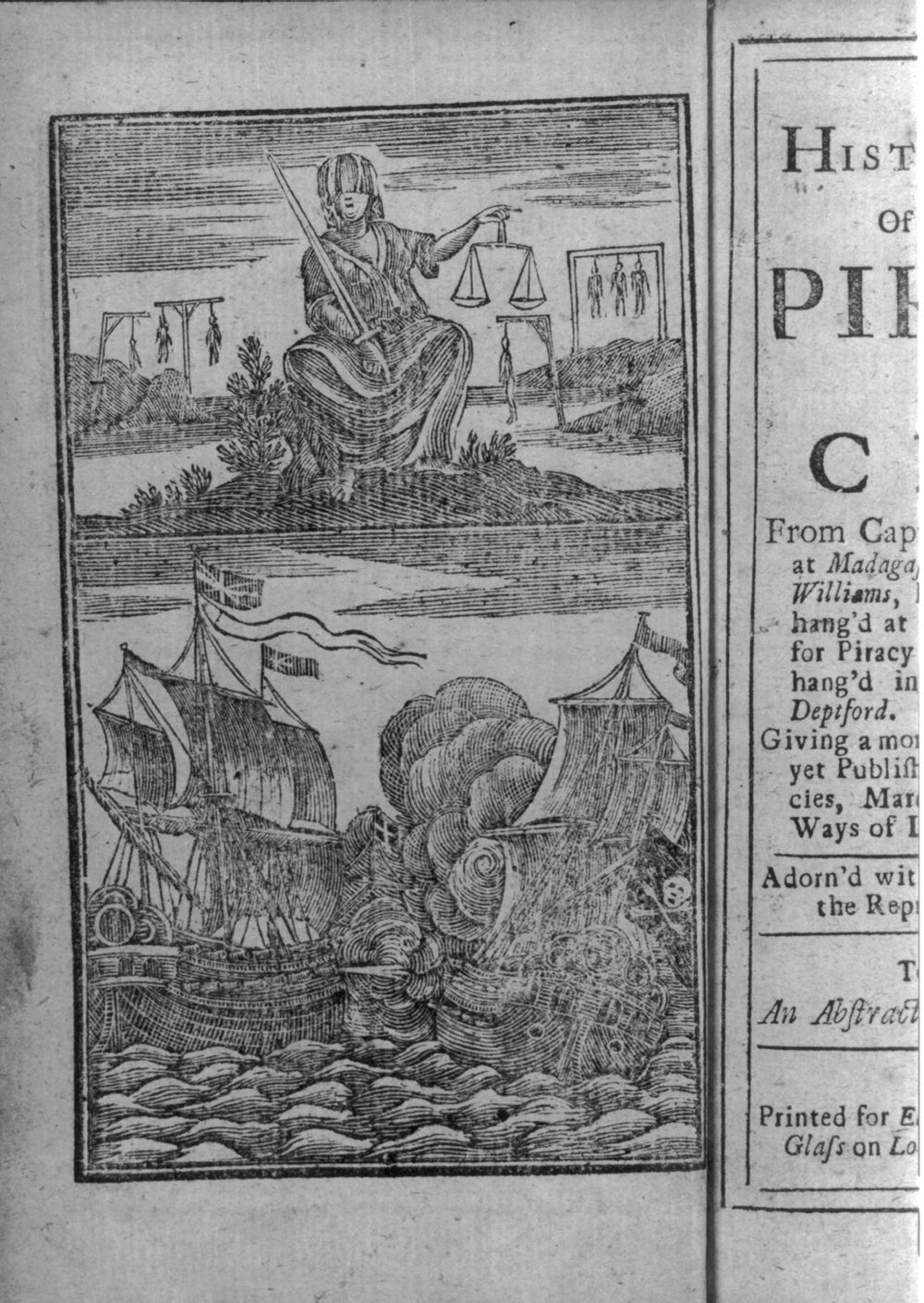
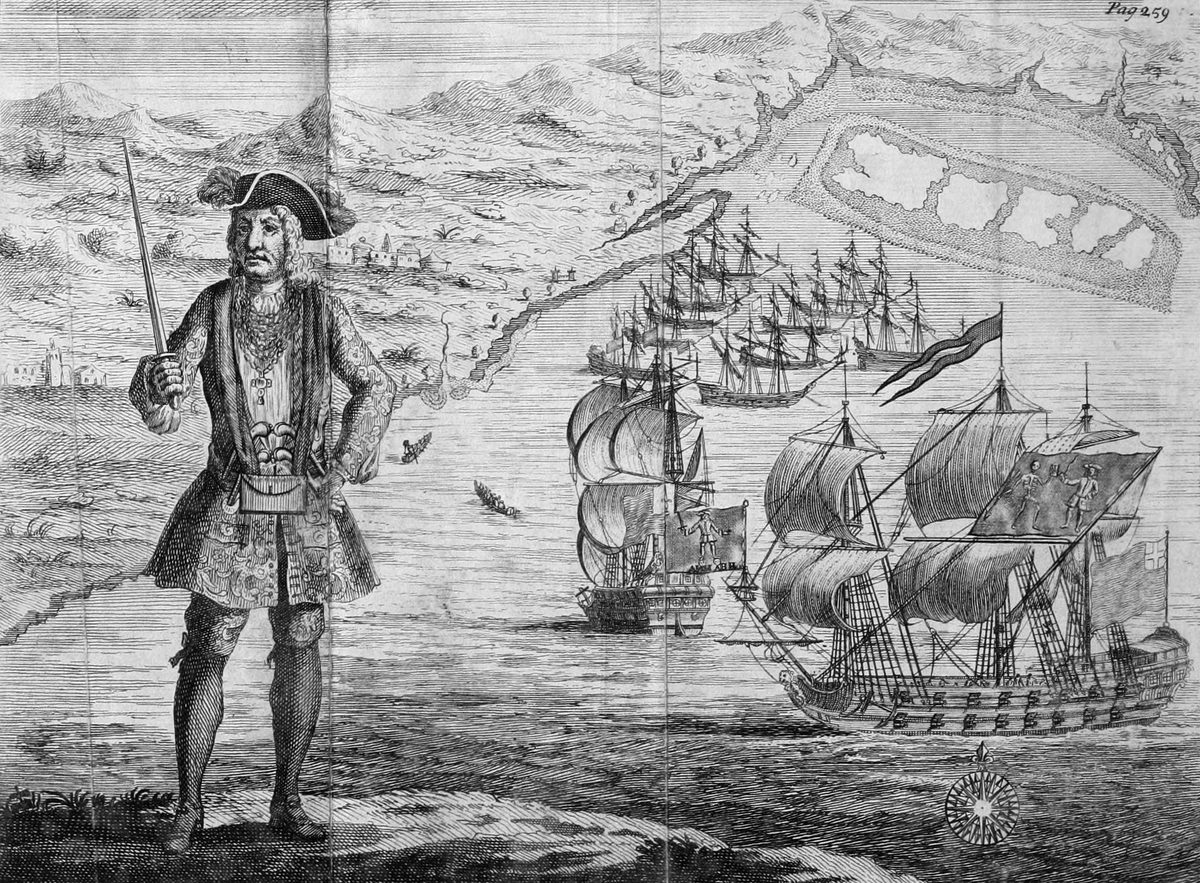
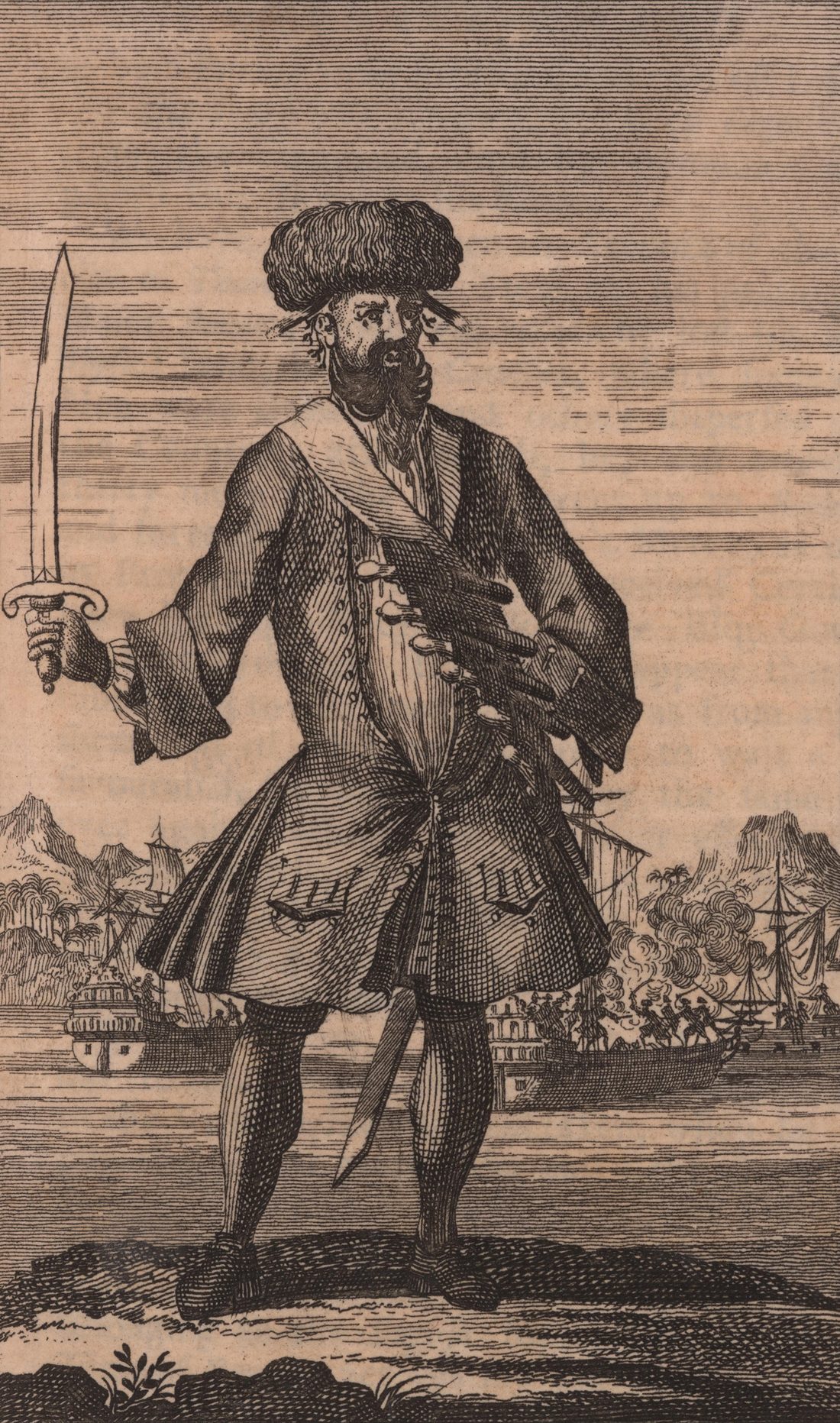
- "Captain Charles Johnson," A General History of the Pyrates (1724) — primary as period artifact, unreliable on specifics; contains fabrication, invented speeches, and substantive differences between the May 1724 first edition and the December 1724 second edition. Now identified as the work of Nathaniel Mist (Bialuschewski 2004; Brooks 2015), Jacobite editor of the Weekly Journal; the older Daniel Defoe attribution is no longer supported. Specify which edition is being cited if the difference matters. The Bellamy "Beer-speech" episode is almost certainly a Mist embellishment following a St. Augustine literary trope (Frohock 2015), not a contemporary 1717 record. Frohock further argues the entire GH operates as double satire — meaning the "pirate democrat / Robin Hood" framing that the book seems to advance is systematically undercut by Mist's own narrator. Read with that frame, not at face value.
- Philip Gosse, The Pirates' Who's Who (1924) — early-20th-century alphabetical biographical reference, full text on Project Gutenberg. Useful for cross-checking dates and names; tertiary, not primary.
- Elizabeth Reynard, The Narrow Land (1934) — folklore, source of "Maria Hallett" name.
- Hildreth Gilman Hawes, The Bellamy Treasure: The Pirates of the "Whydah" in the Gulf of Maine (Augusta Press, 1940) — popular Maine-regional book reviewed by Alfred B. Sears in The Mississippi Valley Historical Review 27, no. 4 (March 1941) as "breezy, undocumented" and a "colorful yarn." Use only for historiography of the Bellamy folk-tradition; do not cite for facts. Source of the "Robinhood of the Seas" branding tradition and the "Maine coves and rivers" treasure legend (the Norumbega / Penobscot careening story is Hawes's invention or a Maine folk embroidery, not a 1717 navigational reality). JSTOR (review)
- Rachel Rueckert, If the Tide Turns (Kensington, 2024) — historical fiction novel about Bellamy and the Whydah, with the Hallett character renamed Maria Brown. Useful as a contemporary fiction reference; cite carefully.
Primary source inventory
| Source | Session(s) | Status | Notes |
|---|---|---|---|
| 1719 world map (Educator Guide) | S3 | Ready | In the Real Pirates Salem Educator Guide |
| Cargo data (367/312, fleet of 4) | S5, S6, S11 | Ready | Corroborated across multiple sources |
| Olaudah Equiano narrative excerpt | S6, S17 | Needs age-appropriate selection | Frame clearly: 1756 capture, 40 years after Whydah. Facing History has vetted middle-school excerpts. |
| Ship's Articles text (Roberts' as analogue) | S10 | Reframe + age-adapt | Teach explicitly that Whydah's own articles don't survive; Roberts' 1721 articles (Johnson 1724) are analogue only. |
| Boston Vice-Admiralty Court testimony (1717) — Trial of Eight Persons (Boston, 1718) | S11, S17 | Excerpts on this site | Davis (p. 318), Hoof (p. 319), Dunavan, Brown depositions — see Primary-source spotlight near the wreck section. Persistent ID: name.umdl.umich.edu/N01688.0001.001 (Michigan Evans Early American Imprints). Modern academic edition: Baer 2007, vol. 2, pp. 289–319. |
| Cotton Mather, "Instructions to the Living" (1717) | S11 (survivor coda) | Text accessible + commercial-motivation note | Full text on Michigan Evans Early American Imprints. Persistent ID: name.umdl.umich.edu/N01600.0001.001. Mather's diary entry of 21 Nov 1717 reveals commercial alongside sermonic motivation. Primary source for what was said about the pirates; filtered for the pirates' own words. |
| Cape Cod eyewitness accounts of wreck | S11 | Sourced | Southack's report to Gov. Shute (MHS holds the letters collection). Davis and Dunavan depositions in the Trial of Eight Persons are the eyewitness accounts from inside the wreck and the Mary Anne grounding respectively. |
| Southack's 1717 chart of New England | S13 | Located | Norman B. Leventhal Map & Education Center (Boston Public Library) has digitized copies. Local file: pics/southack-bay-of-fundy-1731.jpg. 1734 Cape Cod chart reproduced on old-maps.com. Original 1717 manuscript at the Massachusetts State Archives — note the famous red X on reproductions is a later addition; Southack's own mark is the printed label "Pirate Ship Whido lost." |
| Moll's 1719 world map | S3 | Reproductions widely available | Stanford Ruderman collection has high-res scans. |
| Artifact images (bell, King's shoe, coins, gold dust) | S5, S13, S14, S17 | Ready | Expedition Whydah site + Real Pirates Salem materials. |
| Ehrlich 1989 — Akan gold ornaments catalogue (African Arts 22.4) | S5, S6, S17 | Ready | Peer-reviewed Africanist art-history article with 18 figures of Whydah-recovered Akan gold. JSTOR. Documents 79+ Akan-identified ornaments by 1989; demonstrates systematic mutilation for the bullion trade. Keystone source for the African end of the Whydah voyage. |
| Ship comparison data (slaver/Navy/merchant/fishing) | FT2 pre-paddle brief | Compile source packets | Ship-types rank prep. Rediker, Woodard, British Tars blog all usable. |
| Pop-culture pirate clips | S11 (real-vs-made-up, optional) | Ready | Pirates of the Caribbean, Black Sails, classic Treasure Island. Short clips only. (The standalone pop-culture session was retired with S12.) |
Period engravings (1724)